
Publishing good content is only half the job. To rank for competitive search terms, other websites need to vouch for that content by linking to it. The real question is how to build high-quality backlinks without wasting time on outreach that goes nowhere or taking shortcuts that put your website at risk. The six steps below show a proven path to long-term SEO success.
This guide shows a practical, repeatable process for building high-quality backlinks. It is aimed at businesses that want results that last, not a short spike followed by a drop after the next Google update.
What counts as a high-quality backlink?
A high-quality backlink comes from a trusted website that is relevant to your topic, sits inside the main content and makes sense for the reader. One such link from a respected trade publication is usually worth more than dozens of links from small blogs, directories or unrelated sites. If you want to assess links in detail, our article on what makes a backlink valuable covers eight factors to check.
Why it is worth the effort: according to Backlinko, the page in position one on Google has on average 3.8 times more backlinks than the pages in positions two to ten. And Ahrefs found that 96.55% of pages get no traffic from Google, with a lack of backlinks being one of the main reasons.
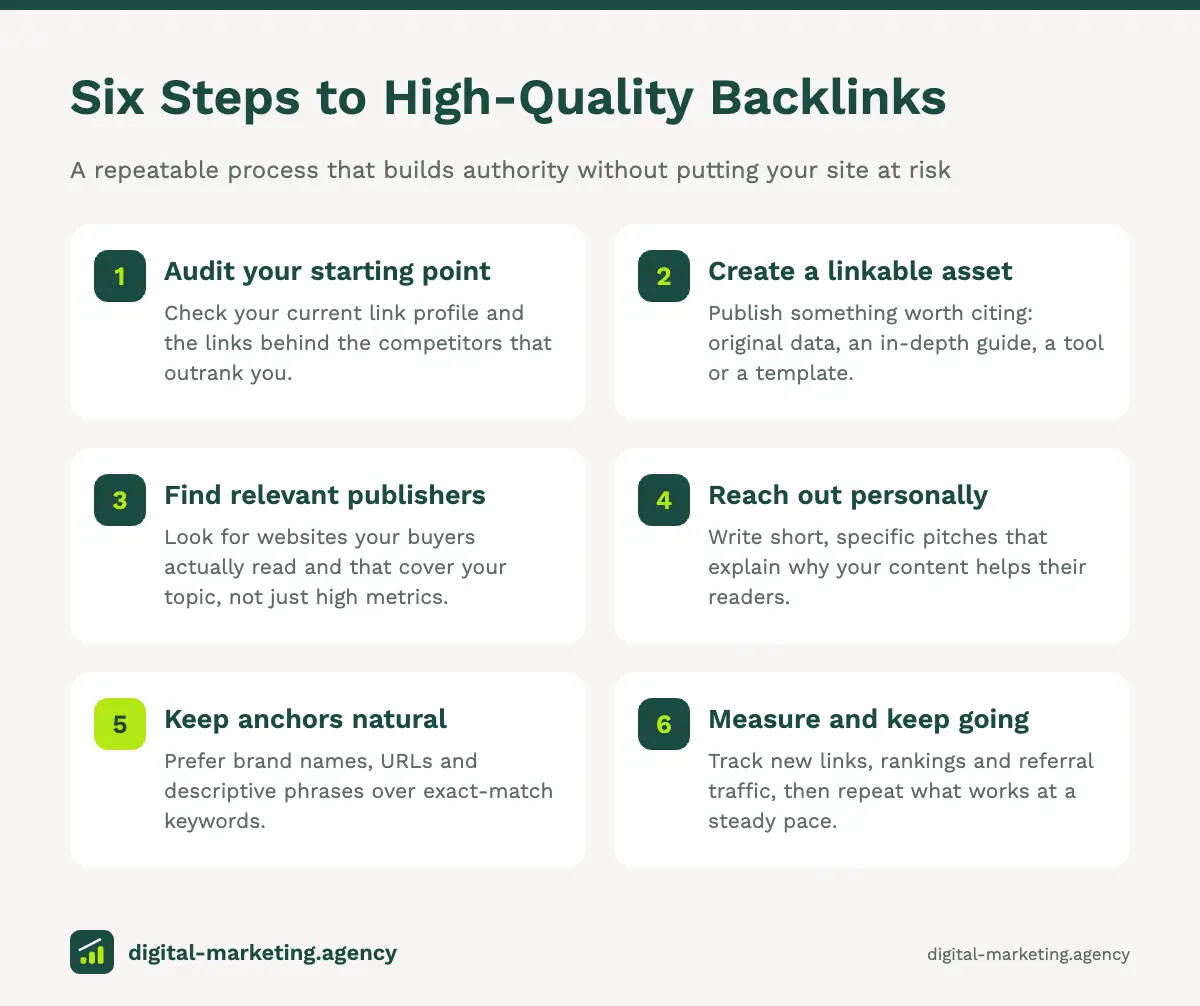
Step 1: Audit your starting point
Before you build new links, look at what you already have. Tools such as Google Search Console, Ahrefs or Semrush show which domains link to you, which pages attract links and which anchor texts are used. Then compare your profile with the competitors who outrank you for your most important keywords. Where do they get their links from? Which of their pages attract the most? The answers show you both the gap and the opportunities.
Step 2: Create content that deserves links
The easiest way to build high-quality backlinks is to publish something worth citing. People link to content that helps them make a point or saves them work. Typical linkable assets are:
- original data, surveys or studies,
- in-depth guides that answer a question better than anything else available,
- templates, checklists and calculators,
- clear expert opinions on current developments in your industry.
It is better to publish a few strong pieces than many average ones. A single good study can attract links for years.
Step 3: Find relevant publishers
Make a list of websites your buyers actually read: trade magazines, industry blogs, association websites, podcasts and newsletters. Relevance matters more than metrics. A specializt blog with a loyal audience in your niche is often more valuable than a large general site that has nothing to do with your topic.
For Measurable Backlink Growth
We build relevant backlinks through manual outreach and editorial placements, with transparent reporting on every link.
Step 4: Reach out personally
Personal outreach is still the most reliable way to build high-quality backlinks. Outreach works when it is short, specific and useful for the recipient. Explain in a few sentences why your content helps their readers, refer to an article they have published and make it easy to say yes. Mass emails with generic templates are usually ignored, and they damage your reputation with editors you may want to work with later.
Guest articles and expert contributions
Writing for other websites is still an effective way to reach new audiences and earn a link. Choose publications that are relevant to your field and write content that stands on its own, without hidden advertising. Note that Google’s spam policies count large-scale guest posting campaigns with keyword-rich anchor links as link spam. Quality and natural links are what make the difference.
Relationships and digital PR
Many good links come from relationships: journalists you supply with data, partners you work with, associations you are a member of. Digital PR, for example a survey or a strong news story, can earn links from media that you would never reach through cold outreach. Our article on press releases and SEO explains how news can support your visibility.
Step 5: Keep anchor texts natural
The anchor text is the clickable text of a link. Google uses it to understand what the linked page is about, but too many identical keyword anchors look artificial. A natural profile mainly contains brand names, URLs and descriptive phrases, with keyword anchors only now and then.
Step 6: Measure results and build high-quality backlinks steadily
Track new and lost links, the rankings of the pages you are promoting and the referral traffic they receive. Links usually need three to six months to have a visible effect on rankings. A steady flow of good links over many months looks natural and builds lasting authority. Sudden spikes of hundreds of links, on the other hand, are a warning sign.
What to avoid when you build high-quality backlinks
Some methods promise quick results but can harm your site: buying links for ranking purposes, link farms and private blog networks, automated link building and excessive link exchanges. Google may ignore such links or, in serious cases, take manual action. You will find more pitfalls in our article on common link building mistakes.
Conclusion
High-quality backlinks are the result of a process, not a one-off action. Analyze your starting point, create content worth linking to, find relevant publishers, reach out personally, keep anchor texts natural and measure what works. Companies that follow this process consistently build authority that lasts, and they do not have to worry about the next algorithm update.
If you would rather hand this work to specializts, our link building services cover research, outreach and reporting.
Backlink Building FAQs
Short answers to common questions about building high-quality backlinks.
What makes a backlink high quality?
A high-quality backlink comes from a trusted, established website that covers a topic related to yours. It sits inside the main text, uses natural anchor text and is useful for the reader. Links from many different relevant domains are worth more than many links from the same few sites.
How many backlinks should I build per month?
There is no ideal number. What matters is that the pace fits your website and your activity. A steady flow of relevant links over months looks natural. Sudden spikes of many links, especially from unrelated sites, can look manipulative.
Which content attracts the most backlinks?
Original data and studies, in-depth guides, templates, checklists, calculators and clear expert opinions on current topics. What they have in common: they help other authors support a point or save them work.
Is guest posting still a good way to build links?
Yes, if you write genuinely useful articles for relevant publications. Google’s spam policies warn against large-scale guest posting campaigns with keyword-rich anchor links. Focus on a few strong contributions and keep links natural.
How do I write an outreach email that gets answers?
Keep it short and personal. Address the editor by name, refer to something they have published, explain in two or three sentences why your content helps their readers and make your request clear. Avoid generic templates and follow up only once.
Which tools help with link building?
Google Search Console shows which sites link to you. Tools such as Ahrefs, Semrush or Majestic help analyze competitors, find link opportunities and monitor new and lost links. A simple spreadsheet is often enough to manage outreach.
How long does it take for new backlinks to work?
Google usually discovers new links within a few weeks. A visible effect on rankings typically takes three to six months, depending on the strength of the links and the competition. Referral traffic can arrive much sooner.
Which link building methods should I avoid?
Avoid buying links for ranking purposes, link farms, private blog networks, automated link building, excessive link exchanges and keyword-stuffed anchors in guest posts or press releases. Google lists these practices as link spam in its spam policies.


[…] have little impact. It is important to understand what makes a backlink valuable if you want your SEO efforts to work over […]
[…] Useful guides, original data and practical tools make link building much easier. Our guide on building high-quality backlinks shows the full […]
Comments are closed.